
Invisalign® Treatment Kitchener
Looking for Invisalign in Kitchener? Achieve a straighter smile with clear aligners.
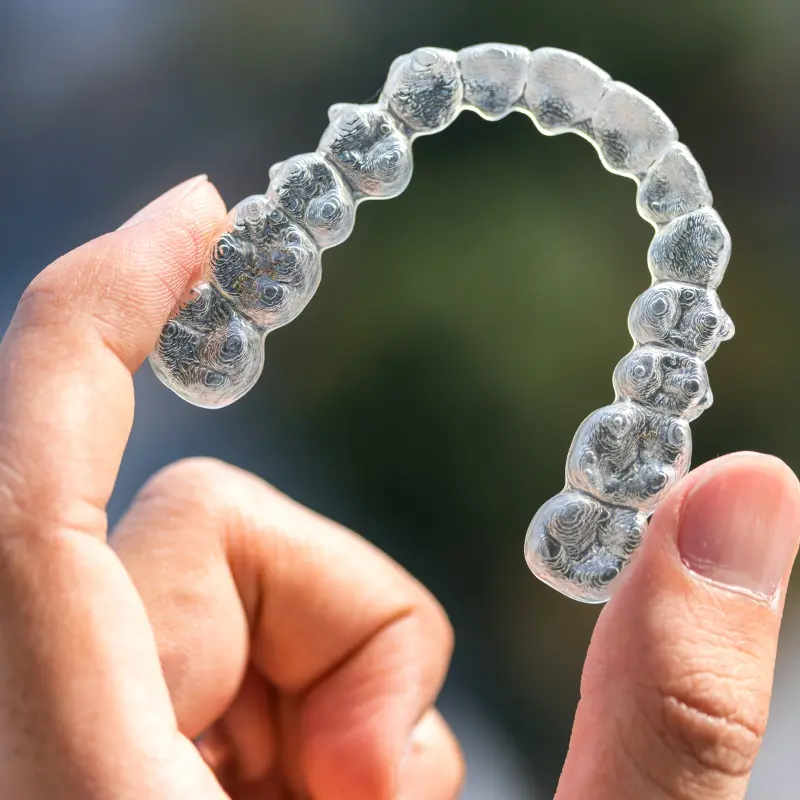
Benefits of Invisalign®
Nearly invisible: The aligners are clear, so they are hard to spot. Most people won't notice you're wearing them.
Comfortable: The aligners are made from smooth, medical-grade plastic that is gentle on your gums and cheeks.
Easy to remove: Take the aligners out to eat, brush, and floss, then pop them back in.
Made for you: Each aligner is custom-made to fit your teeth and move them along the planned path.
Fewer visits: With Invisalign®, most patients come in less often than they would with regular braces.
Your Invisalign® Dentist in Kitchener
At Walk In The Park Family Dental, we stay with you through each part of treatment, from the first consultation to the day your aligners come off. The plan is built around your teeth and what you want to change.
Our Invisalign® Process
First consultation: At your first visit, the dentist checks your teeth and gums to see whether Invisalign® is a good fit. We talk through what you want to change and answer any questions before going further.
Your treatment plan
We take a digital scan to build an accurate 3D model of your teeth. That model lets us map out each step and show you a preview of how your teeth should look at the end.
Making your aligners
From the plan, a set of custom clear aligners is made just for you. Each set shifts your teeth a little further along.
Wearing your aligners
You wear each set for about two weeks, 20 to 22 hours a day. Take them out only to eat, drink, brush, and floss.
Follow-up visits
Every 6 to 8 weeks you come in so we can check your progress and hand over the next set of aligners. These visits are short.
Finishing and retainers
Once treatment is done, you get a set of retainers. Wearing them as directed holds your teeth in their new spots.
Why Choose Walk In The Park Family Dental for Invisalign® in Kitchener
Picking the right provider makes a difference in how your treatment goes. Here is what you can expect when you come to us for Invisalign®.
Experienced and certified
Our dentists are certified Invisalign® providers and have used it to help many patients straighten their teeth over the years.
Personalized care
Every patient's teeth and goals are different. From your first consultation through to the last set of aligners, we keep the plan tailored to what you actually need.
Digital planning and monitoring
We use 3D imaging and digital modelling to plan your treatment and track how your teeth are moving. That helps us make aligners that fit well and follow the plan.
A comfortable office
Our Kitchener clinic is set up to be calm and easy to relax in, so coming in for dental care feels less stressful.
Who Is Invisalign® For?
Invisalign® works well for many adults and teenagers who want to fix common alignment and bite issues without the hassle of regular braces. Some of the conditions clear aligners can help with include:
- Crowding: Insufficient space in your jaw to accommodate all the teeth.
- Spacing Problems: Spaces between your teeth. Overbite: The condition in which the upper front teeth overlap the lower teeth.
- Underbite: The lower teeth are protruding in front of the upper teeth.
- Crossbite: The upper teeth are sometimes located inside the lower teeth.
- Open Bite: A dental occlusal condition with no vertical overlap between the maxillary and mandibular dentition when the mouth is closed.
How to Take Care of Your Invisalign® Aligners
- Clean them regularly: Each time you take your aligners out, rinse them and brush them gently with a soft toothbrush. Use lukewarm water only, since hot water can warp the plastic.
- Store them properly: Keep your aligners in their case whenever they are out of your mouth so they don't get lost or damaged.
- Watch out for staining drinks: Take your aligners out before having anything that stains, such as coffee, tea, or red wine.
How Clear Aligners Work to Move Your Teeth
Clear aligners are a series of custom-made, removable trays moulded to fit closely over your teeth. Each tray in the series is shaped slightly differently from the one before it, and that small difference is what gently guides specific teeth toward their planned positions over time. Because the movement is spread across many trays, the pressure on any single tooth stays gradual rather than sudden.
When you switch to a new aligner, it applies light, controlled force to the teeth that are scheduled to move during that stage. Your teeth respond to this steady pressure by reshaping the bone that supports them, which is a natural biological process the body uses any time teeth are repositioned. In many cases your dentist may also place small tooth-coloured attachments on certain teeth to help the aligners grip and direct movement more precisely.
The full series is mapped out in advance using a digital plan, so each tray builds on the progress of the last. Wearing the aligners for the recommended hours each day is what keeps your treatment on schedule, since the trays can only do their work while they are in your mouth.
What Invisalign® Can and Cannot Treat
Clear aligner therapy can address many common bite and alignment concerns, but it is not the right fit for every situation. Below are the kinds of cases we review with patients at Walk In The Park Family Dental in Kitchener, along with an honest note on its limits.
Mild to Moderate Crowding
When teeth are slightly overlapped or rotated because of limited space, aligners can often guide them into better alignment. More severe crowding sometimes calls for additional treatment or a referral, which we would discuss with you openly.
Gaps and Spacing
Small to moderate gaps between teeth can frequently be closed with a planned series of aligners. We assess the cause of the spacing first, since the right approach depends on what is creating the gaps.
Many Bite Concerns
Issues such as some overbites, underbites, crossbites, and open bites may improve with clear aligners, particularly when they are mild to moderate. Complex skeletal bite problems can fall outside what aligners alone are designed to correct, and in those cases we may suggest other options.
When Aligners May Not Be Suitable
Very complex tooth movements, certain jaw discrepancies, and situations needing significant rotation of rounded teeth may be better served by other treatments. Active gum disease or untreated decay generally needs to be addressed before any orthodontic treatment begins.
From First Scan to Final Retainers: The Treatment Journey
Knowing what each stage involves can make the process feel more straightforward. Here is how a typical clear aligner journey unfolds at our Kitchener practice, from your first appointment through to keeping your results stable.
Digital Scan and Planning
After confirming that aligners suit your needs, we capture a detailed digital scan of your teeth. This scan builds a 3D model that your dentist uses to plan the sequence of movements and to show you a preview of the expected progression.
Wearing Your Aligner Series
You move through your trays in order, typically wearing each set for the time your dentist recommends and keeping them in for the daily hours advised. Removing them only to eat, drink, brush, and floss helps treatment stay on track.
Check-Ins and Retainers
Periodic visits let us confirm your teeth are tracking with the plan and hand over your next trays. Once the active phase is complete, you receive retainers to hold your teeth in their new positions and protect the result over the long term.
Clear Aligners Compared to Traditional Braces
Both clear aligners and fixed braces are well-established ways to straighten teeth, and each has practical trade-offs. Aligners are removable and made of clear plastic, so they tend to be less noticeable and let you eat and clean your teeth without working around brackets and wires. Braces, by contrast, are fixed in place and work continuously without relying on you to wear them for enough hours each day.
Because aligners are removable, they ask for a degree of discipline, since they only move teeth while they are being worn. Fixed braces can be a stronger choice for certain complex movements, while aligners often appeal to patients who prefer a more discreet, low-profile option. The most suitable choice depends on your specific bite, your goals, and your daily routine, all of which we review together rather than assuming one approach fits everyone.
Caring for Your Aligners Day to Day
A simple daily routine helps keep your trays clear, fresh, and effective throughout treatment. These habits also protect your teeth and gums while you wear aligners.
- Rinse your aligners each time you remove them and brush them gently with a soft toothbrush to keep them clear.
- Use lukewarm water only, since hot water can warp the plastic and affect the fit.
- Brush and floss your teeth before putting the aligners back in, so food and plaque are not trapped against the enamel.
- Drink plain water while wearing your trays, and remove them for coloured or sugary drinks that can stain or cause decay.
- Keep your aligners in their protective case when they are out of your mouth to avoid loss or damage.
- Bring your current and previous trays to appointments so we can check fit and progress.
Is Invisalign® Right for You?
Clear aligners can be a comfortable, discreet way to improve alignment for many teens and adults, but the best way to know if they suit you is a proper assessment. Good candidates are usually people with mild to moderate concerns who are ready to wear their trays for the recommended hours each day and keep up with their dental care.
At your consultation, Dr. Daniel Park or Dr. Alison Midgley will examine your teeth and bite, talk through your goals, and explain whether aligners, another orthodontic option, or a referral makes the most sense for you. We review the options honestly so you can make an informed decision about your care.
Invisalign® Frequently Asked Questions
How long does clear aligner treatment take?
Treatment length varies from person to person and depends on how much movement your teeth need and how consistently you wear your aligners. After reviewing your scan, your dentist can give you a clearer sense of the expected timeline for your specific case.
Are clear aligners uncomfortable to wear?
Many people feel mild pressure or tightness for a day or two after switching to a new tray, which usually eases as your teeth adjust. The trays are made of smooth plastic designed to minimize irritation to your gums and cheeks, and most patients adapt to wearing them quickly.
How much does Invisalign® cost in Kitchener?
Cost varies depending on the complexity of your case and the number of aligners involved, so there is no single fixed price. We review pricing with you at your consultation and can discuss payment options and any dental insurance coverage that may apply.
Will I need to wear a retainer afterward?
Yes. Teeth can gradually shift over time, so wearing retainers as directed after treatment is important for keeping your results stable. Your dentist will explain how often to wear them once your active treatment is finished.
Can I eat normally with clear aligners?
You remove your aligners to eat, so there are no food restrictions during meals the way there can be with fixed braces. Just rinse your mouth, brush when you can, and clean your trays before putting them back in.
Make an Appointment
If you'd like to find out whether Invisalign® is right for you, get in touch with Walk In The Park Family Dental. Call us at (519) 743-1172 to book a consultation at our Kitchener office.
Ready to talk about invisalign®?
Book your visit to Walk In The Park Family Dental in Kitchener — new patients are always welcome.
Book an AppointmentBook your visit to our Kitchener clinic
- Address: 890 Glasgow St #6, Kitchener, ON N2N 3G6
- Phone: (519) 743-1172
- Email: [email protected]